
Posts by Hoekstra Trading LLC
Hoekstra Trading “D4T” Theoretical RIN Price

Hoekstra Trading’s “D4T” value is the calculated theoretical price of a D4 RIN using an equation published by Scott Irwin, Kristen McCormack, and James H. Stock (IMS) in 2020. It is a theoretical, not a market value, that is calculated using Hoekstra Trading’s best estimate of the values of the variables and parameters of the…
Read MoreTop 3 Takeaways From The OPIS 2023 Conference

See the other posts in this series, Top 3 Takeaways: 2021, 2022, 2023, 2024 2023’s top 3 takeaways from Hoekstra Trading’s perspective: Recommendation Anyone with a stake in RINs pricing and economics should get Hoekstra Research Report 10 which includes this Hoekstra IMS RINs pricing spreadsheet that accurately calculates theoretical RIN prices, tracks them versus…
Read MoreBaby the RIN Must Fall, Part 4 — D4 RIN Price Nosedives, Triggering a Flurry of Market Reactions
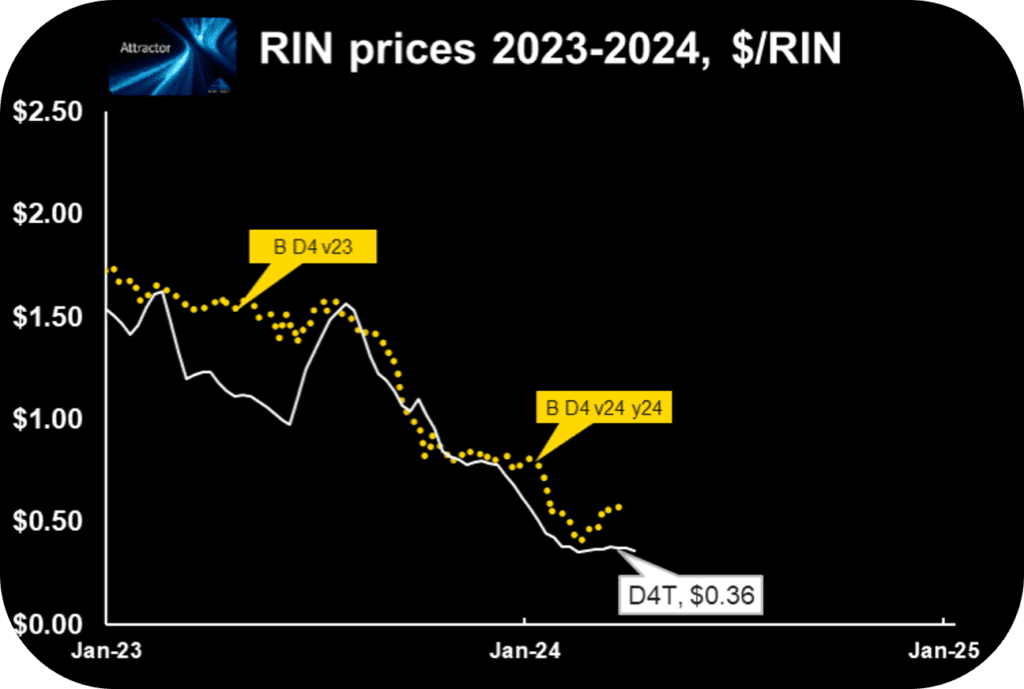
In late July, 2023, the D4 Renewable Identification Number (RIN) credit price started nosediving from $1.60 on July 25 to $1.00 on September 25. The D4 RIN is part of the regulatory system that sets and ensures compliance with mandates on the supply of renewable fuel components in diesel fuel in the United States. Read…
Read MoreFalling RIN Prices

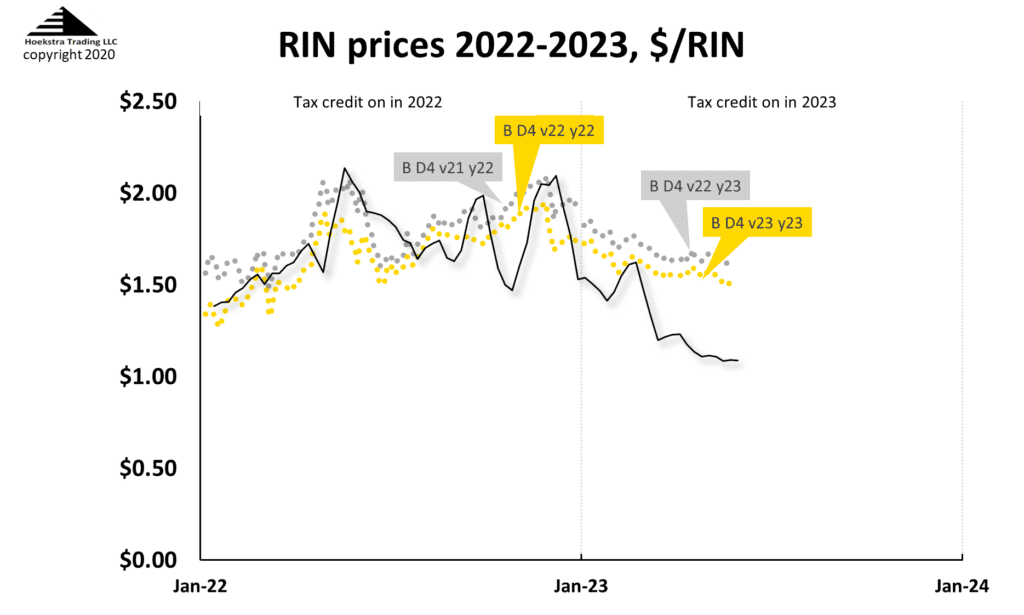
The actual price (gold) and model price (black) agreed closely in the first half of 2022. Then the model began a steady downtrend to half its peak level. The actual market price has followed this trend with a lag and a much lower slope, forming a growing gap between the theoretical and actual prices.
Read MoreSulfur Credit Strategy Pays Off For Refiners
The price of the Tier 3 gasoline sulfur credits has increased 12-fold in the last two years, and the impacts have been showing up in refining companies’ earnings. Four years ago, Dave Lamp, CEO of CVR Energy Inc., spoke about CVR’s Tier 3 strategy in their 2nd quarter 2019 earnings conference call: Dave Lamp, answering…
Read MoreBaby the RIN Must Fall Part 2 – Will A RIN Price Crash Make a Mess In The Renewable Diesel Market?
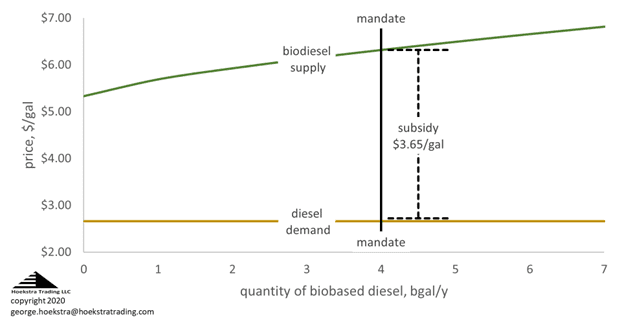
U.S. production of hydrogenated renewable diesel (RD), made from soybean oil and animal fats like used cooking oil, is growing faster than expected. That may sound like good news for the renewable fuels industry, but it comes with the fear that the rapid growth might trigger a sudden crash of Renewable Identification Number (RIN) prices…
Read MoreBaby, The RIN Must Fall Part 1 – What’s Behind The Chatter About RIN Prices Crashing To Zero?
The Renewable Identification Number (RIN) is an environmental credit that functions as a subsidy to force renewable fuels like ethanol and soybean oil into gasoline and diesel fuel. Recently, chatter has bubbled up across the RINs ecosystem that RIN prices might crash to zero in the near future. That would be headline news that would…
Read More99% Of Fuel Exhaust Problem Is Solved
Most people under 30 don’t know that 99% of the problem with vehicle exhaust emissions was solved while they were growing up, as evidenced by this chart showing the reduction of sulfur in gasoline to 10 parts per million (ppm). This, along with reductions in nitrogen oxides (NOx), toxics, particulates, and volatile organic compounds (VOCs),…
Read MoreModeling RINs As An Option – Part 2
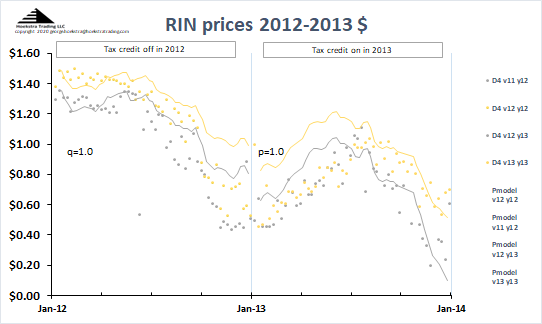
Also see Part 1 of this series In Figure 1, the silver points represent the price of D4 RINs that expire at the end of that trading year (2012), and the gold points represent RINs that expire at the end of the next trading year (2013). The lines are calculated by the Hoekstra Trading RIN…
Read MoreEconomics of Octane Loss In Gasoline Desulfurizers
With gasoline margins surprisingly strong, refiners are focusing on economic costs and opportunities in cracked gasoline desulfurization. These opportunities come in the categories: feed, catalyst, process, sulfur credits, laboratory tools, revamps, and new investment opportunities. Many of them can be captured quickly with no capital investment. This segment of the RefComm 2023 FCC program will…
Read More